
Materials & specifications · Gurgaon homes
Plywood vs HDHMR for modular furniture: choose by use, not label.
For a well-specified Gurgaon home, the useful question is not “which board is best?” It is which component needs which material, finish, edge treatment and site protection.
Review my material briefQuick reference checklist
Five checks before approving a board specification.
Split the home into use zones.
A sink-side cabinet, a dry bedroom wardrobe, a painted shutter and a TV unit do not face the same risk. Compare the board by component, not by one whole-home label.
Name the actual product and thickness.
“Plywood” and “HDHMR” are not complete specifications. Ask for the product or declared grade, thickness, where it will be used and the front/back finish.
Treat water risk as a design issue.
Leaks, unsealed cut-outs, damp walls, poor ventilation and exposed edges can matter as much as the board itself. Ask how those conditions are being managed.
Match the board to the finish and hardware.
Routed or painted shutters, laminate-faced carcasses, wide shutters and working drawers each need a compatible substrate, edge detail and fitting plan.
Keep a sample-to-BOQ trail.
Attach the approved sample, drawing revision and material schedule to the quotation. This gives you something concrete to check before manufacture and delivery.
The practical answer: do not specify one material for every part of the home.
Many Gurgaon homeowners are offered a simple choice: plywood or HDHMR. That is too broad to be useful. A kitchen includes dry cabinets, sink-adjacent components, shutters, fillers, backs, appliance openings and edges around cut-outs. A wardrobe may include a carcass, loft, shutters, drawers, mirror or glass interfaces and a wall that may itself need attention. Each component should be selected around its job.
A practical, well-specified home is usually not about choosing the most expensive label everywhere. It is about making a room-specific selection that can be explained, measured and checked. GridTech’s role in that conversation is to turn the room, finish intent and operating conditions into a written material brief before production is released.
Start with the component, then decide the board.
Kitchen carcasses and sink-side zones
First identify the moisture path: sink connections, nearby plumbing, service shafts, appliance cut-outs, wall damp and cleaning habits. The proposal should state the carcass board, edge treatment, cut-out treatment and who is responsible if a service leak or unfinished wall needs correction. A board label alone does not solve a leaking pipe or an unsealed edge.
Wardrobe carcasses, lofts and internals
Bedroom storage is usually a dry-use decision, but it still needs a check for exterior-wall damp, AC drainage, skirting, wall variation and the load of shelves or hanging. The useful question is whether the carcass, internal shelves and back panel are specified for that location—not whether the whole wardrobe has been given a generic premium description.
Shutters, routed details and painted faces
Where the design depends on a routed profile, a painted finish or a highly uniform face, ask for the substrate and finish process to be named together. A shutter decision is also a hardware decision: width, height, weight, handle/profile, hinge count and opening clearance should be checked on the drawing before the material is locked.
TV units, study furniture and dry living areas
These areas often shift the conversation towards surface finish, cable access, load, service access and the visual proportion of the elevation. Do not lose the practical details: wall-fixing condition, heat/ventilation around electronics, access to sockets and whether the unit can be serviced after installation.
What the names can—and cannot—tell you.
Plywood is a layered wood-panel product, and Indian standards distinguish general-purpose plywood from marine plywood. The Bureau of Indian Standards lists IS 303 for general-purpose plywood and IS 710 for marine plywood. Those references help a homeowner ask a better question about the declared product; they do not replace the need to see the actual scope, label, licence claim and installation condition.
HDHMR is commonly used in the market to describe a dense, moisture-resistant engineered fibreboard product. Its stated performance, thicknesses, finish suitability and processing requirements can vary by product. A supplier should therefore name the board product rather than use HDHMR as a catch-all promise. Product literature is useful evidence, but the final decision still has to fit the component and site.
A better material brief for a practical Gurgaon home.
Instead of asking for “premium plywood” or “HDHMR throughout,” ask for a component schedule. It should identify the room, unit, board/product, thickness, visible finish, internal finish, edge treatment, hardware interface, special exposure and exclusions. This creates a sensible middle path for homes that want durable, properly planned modular work without treating every room as a luxury showcase.
For example, the brief may distinguish a moisture-sensitive kitchen zone from a dry wardrobe carcass, and both from a shutter selected for a routed or painted look. It can also identify where a wall, plumbing leak, appliance cut-out or society work restriction must be resolved before measurement. That is more useful than comparing two brand names without knowing what the supplier is actually building.
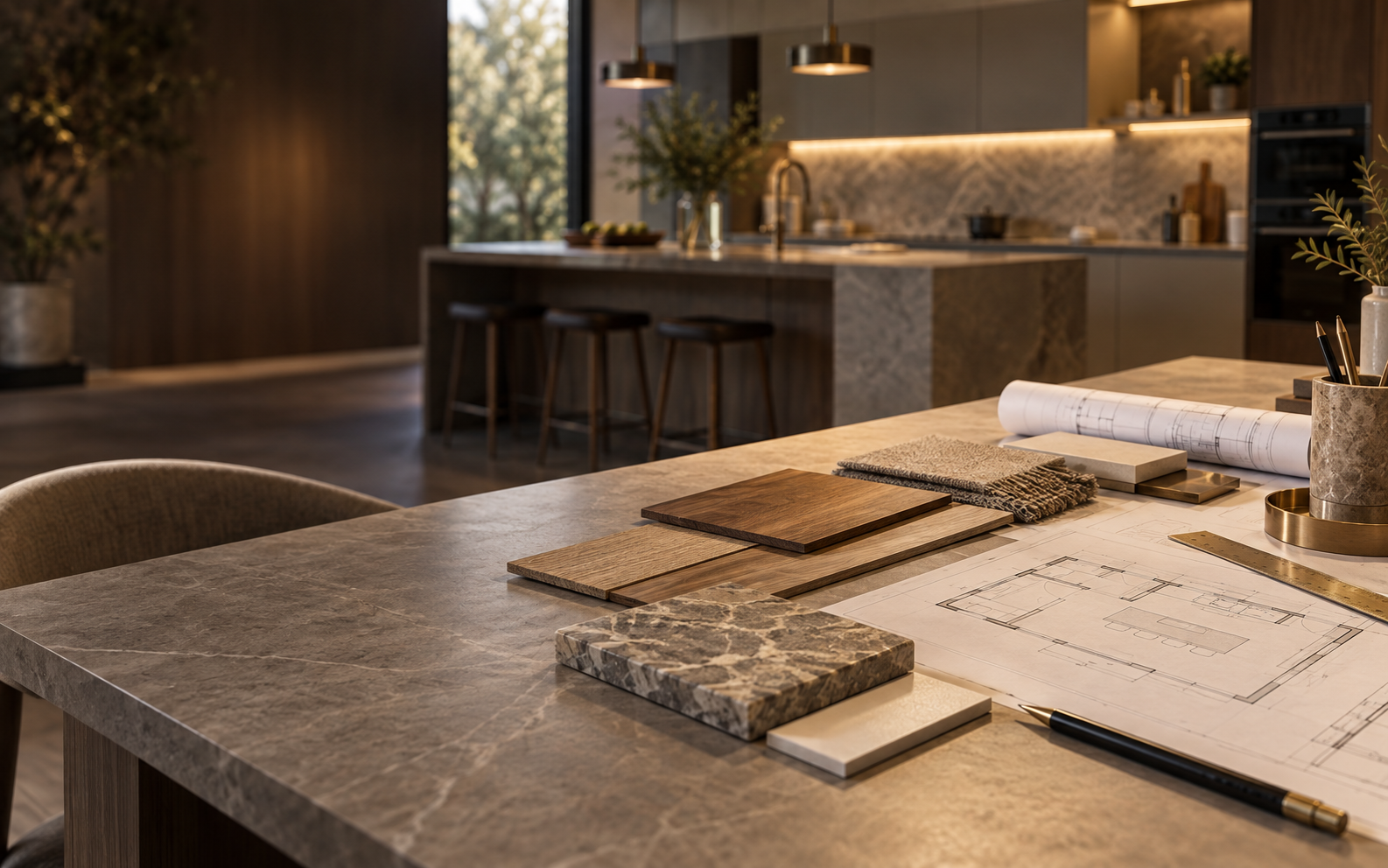
Material brief matrix
What to request before comparing plywood and HDHMR proposals.
| Where the board is used | Question to ask | Evidence to keep |
|---|---|---|
| Kitchen carcass | What board/product, thickness, edge treatment and service-risk detail is proposed for each cabinet group? | Unit-wise drawing and material schedule. |
| Sink or utility area | How are plumbing access, cut-outs, exposed edges, wall damp and leak risk handled? | Site photographs and responsibility note. |
| Wardrobe carcass and loft | How do wall condition, skirting, shelf load and hanging requirements affect the board selection? | Measured elevation and internal-layout drawing. |
| Shutters | Which substrate supports the chosen finish, profile, width and hardware system? | Approved sample, shutter schedule and hardware line. |
| TV or study unit | How will wall fixing, cable access, heat and future servicing be managed? | Service-point drawing and fixing note. |
Before you commit
Four shortcuts that create avoidable material problems.
Choosing from a label alone
- “Plywood” or “HDHMR” without product, thickness and use-zone detail is incomplete.
- Ask for the material schedule before accepting the quotation.
Calling a wet-zone risk a board problem only
- Unresolved leaks, damp walls and unprotected edges can defeat an otherwise sensible selection.
- Allocate the service correction and protection method in writing.
Separating shutters from hardware
- A shutter’s size, finish and weight influence the fitting system and daily operation.
- Approve the shutter and hardware schedule together.
Approving a sample without a scope trail
- A loose sample does not prove what will reach each room.
- Link the sample reference to the drawing, BOQ and delivery check.
Frequently asked
Useful before you specify a board.
Is plywood always the better choice for a modular kitchen?
No. The right choice depends on the component, exposure to water or leaks, edge treatment, finish, hardware and the specification actually offered. Divide the kitchen into use zones instead of assigning one material label to every part.
Can HDHMR be used for wardrobe shutters?
It can be considered where the stated board product, finish system, shutter size, hardware and room conditions are appropriate. The quotation should name the product, thickness, finish and edge or profile treatment rather than simply say HDHMR.
What should a board specification include?
Ask for the exact product or grade, thickness, use zone, front and back finish, exposed-edge treatment, back-panel treatment, hardware interface and known exclusions or site dependencies.
How do I verify what will be supplied?
Keep the approved drawing, material schedule and sample reference together. Before manufacture or delivery, ask to reconcile the labelled board product and finish with the written specification. Standards or licence claims should be checked through official BIS tools where applicable.
Keep planning
Related guides for your next decision.
 Materials & specificationsSee the parent guide for material decisions.
Kitchen cabinet materialsPlan kitchen carcasses, shutters and exposed zones.
Wardrobe shutter materialsCompare finish, maintenance and daily bedroom use.
Specification checklistKeep board, finish, edge and hardware details visible.