
Gurgaon home storage & space solutions · Gurgaon homeowners
Entryway and crockery storage ideas for a practical home
Two often-missed storage zones that can make daily routines calmer and more organised. Plan the right questions, scope and next step for your Gurgaon home.
Plan this for my homeQuick reference checklist
Five checks before you make the next decision.
Count shoes, bags and daily drop-zone items before sizing entry storage.
Use the items and routine in the room to test whether the proposed storage will really reduce friction. For crockery unit design Gurgaon, this is the first evidence to establish before any solution is suggested.
Allow ventilation and cleaning access inside shoe storage.
Measure useable clearance as well as cabinet dimensions; storage should not make the room harder to move through. For crockery unit design Gurgaon, this tells you what must be separated, specified or checked instead of assumed.
Check door swing and passage width before adding an entry unit.
Group this requirement by daily, occasional and seasonal use before choosing a configuration. For crockery unit design Gurgaon, this prevents the decision from being made from a sample, image or rough estimate alone.
Plan crockery storage around the actual collection and serving routine.
Resolve services and access before enclosing them behind a finished panel. For crockery unit design Gurgaon, this should be resolved before an order, access booking or installation commitment.
Separate display shelves from dust-protected closed storage.
Review the decision from the user’s position in the room, not only from the elevation. For crockery unit design Gurgaon, keep the final answer with the approved scope so it can be checked later.
What this guide helps you decide.
Two often-missed storage zones that can make daily routines calmer and more organised.
Start with what the household needs to store.
Count shoes, bags and daily drop-zone items before sizing entry storage. Allow ventilation and cleaning access inside shoe storage. These two observations establish whether the issue is a room condition, a specification question or a change in how the space needs to work.
Protect movement while adding capacity.
Check door swing and passage width before adding an entry unit. Plan crockery storage around the actual collection and serving routine. Put the result into a drawing, written scope or site note so the proposed solution can be assessed on the same basis.
Make storage easy to use and maintain.
Separate display shelves from dust-protected closed storage. This is the point to decide what is proportionate for the home, who owns any site dependency and what should be confirmed before work proceeds.
Use this guide in a focused consultation.
Bring the relevant photographs, measurements, existing drawings or quotations for this specific decision. That lets the conversation focus on crockery unit design Gurgaon rather than starting with a generic whole-home brief.
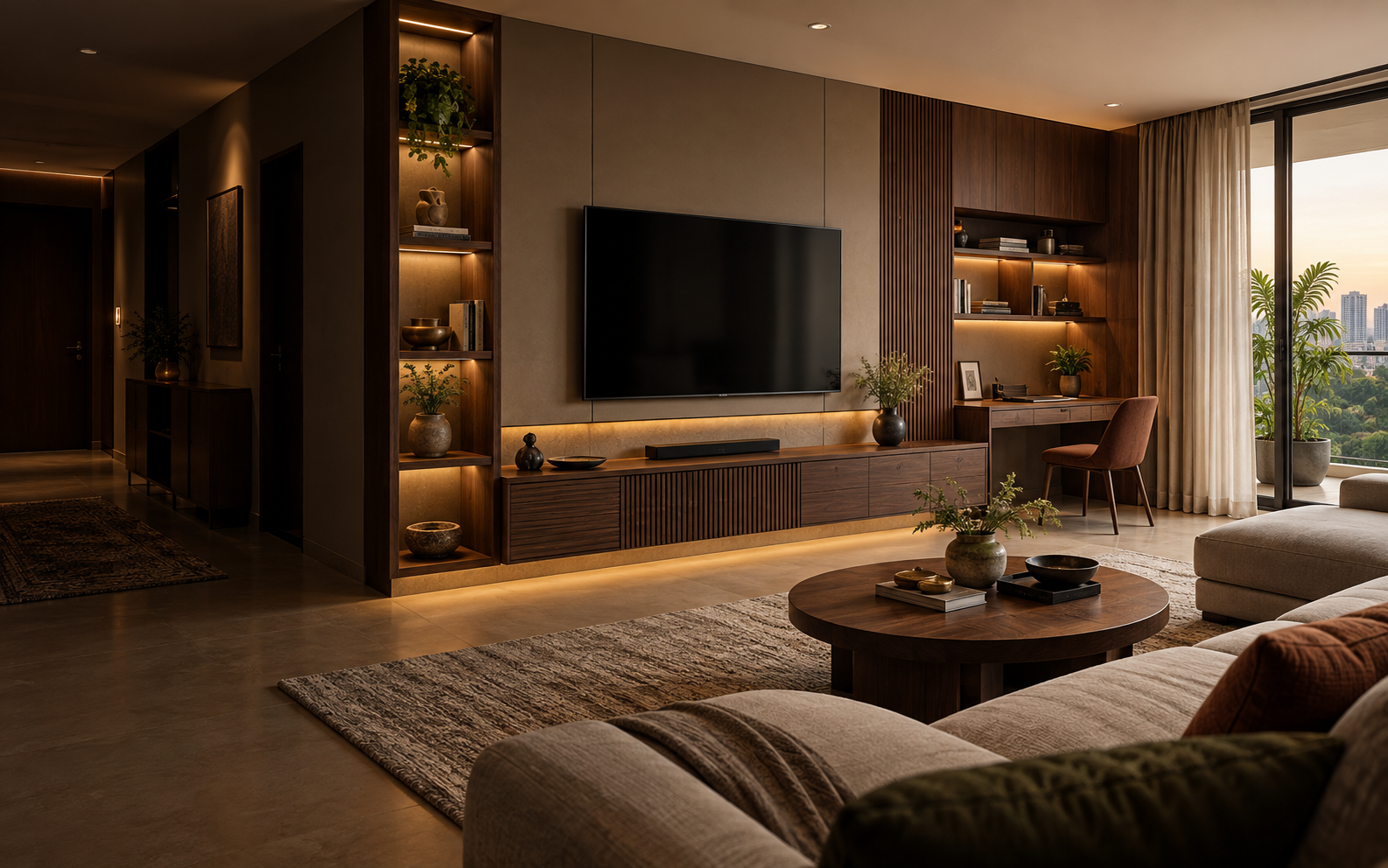
Practical comparison
Layout and storage matrix
What should be tested in the room before a storage solution is selected.
| Decision point | Evidence to request or record |
|---|---|
| Count shoes, bags and daily drop-zone items before sizing entry storage. | Photograph, dimension or existing-condition note. |
| Allow ventilation and cleaning access inside shoe storage. | Named material, component, hardware or permission detail. |
| Check door swing and passage width before adding an entry unit. | Approved drawing, layout or access-plan reference. |
| Plan crockery storage around the actual collection and serving routine. | Written scope, responsibility or exclusion. |
| Separate display shelves from dust-protected closed storage. | Final-measurement, installation or handover record. |
Questions for your proposal
Four questions worth asking about this decision.
Use these questions to test whether the proposal improves capacity without compromising movement.
- What evidence confirms this on the room, drawing or quotation?Count shoes, bags and daily drop-zone items before sizing entry storage.
- Which material, fitting, permission or site condition changes the answer?Allow ventilation and cleaning access inside shoe storage.
- What would make this option impractical after installation?Check door swing and passage width before adding an entry unit.
- Which responsibility or exclusion needs to be written down?Plan crockery storage around the actual collection and serving routine.
Avoid these mistakes
Four ways this decision can go wrong.
Skipping the first condition check
- Count shoes, bags and daily drop-zone items before sizing entry storage.
- Record the evidence before a solution is proposed.
Treating an assumption as a specification
- Allow ventilation and cleaning access inside shoe storage.
- Ask for the assumption to be named in the written scope.
Choosing before the room is measured
- Check door swing and passage width before adding an entry unit.
- Test it against the measured room, not only an image or sample.
Leaving the practical trade-off unresolved
- Plan crockery storage around the actual collection and serving routine.
- Confirm who owns the answer before the next commitment.
Explore GridTech Modular services for kitchens, wardrobes, storage and furniture →
Frequently asked
Useful before you start.
What should I inspect first for crockery unit design Gurgaon?
Count shoes, bags and daily drop-zone items before sizing entry storage. Begin with that observation, then document it with photographs, dimensions or the relevant drawing.
Why does this detail matter before I choose an option?
Allow ventilation and cleaning access inside shoe storage. It affects whether the proposed solution addresses the actual requirement or only its visible symptom.
What should be written into the scope?
Check door swing and passage width before adding an entry unit. Ask for the answer to appear on the drawing, specification or itemised proposal.
What is the most useful next step?
Plan crockery storage around the actual collection and serving routine. Then confirm separate display shelves from dust-protected closed storage.
Keep planning
Related guides for your next decision.
 Gurgaon home storage & space solutionsParent guide for this decision category.Small apartment storage ideas for Gurgaon homesRelated practical guide for your Gurgaon home.TV unit and living-room storage guide for Gurgaon homesRelated practical guide for your Gurgaon home.Study unit and home-office furniture guide for Gurgaon homesRelated practical guide for your Gurgaon home.